Skip to content
DeLoach copy
  • About
    • Field Services
    • Manufacturing Services
    • Pisciculture Services
    • Design Services
    • Pisciculture & Aqua Farming
    • Water Treatment Systems
    • Wastewater Treatment Systems Equipment
    • Odor Control
    • Water Treatment
    • Iron Oxidation Aerators
    • CO2 Removal-Decarbonators
    • H2s Removal Degasifiers
    • Odor Control-Scrubbers
    • Filtration & Filters
    • Full Product & Service List
    • Replacement Parts
    • AI-Controls
    • American Water Works Association
    • Brooks & Associates, Inc..
    • DHP Training
    • International Desalination
    • Water Surplus
    • WefTec
    • Haynes Equipment
    • Trippensee Shaw
    • Solberg Knowles
    • General Pump
    • Training Videos
    • Odor Control & Air Emissions Guide
    • Aqua Faming/Pisiculture Guide
  • Contact
  • (941) 371-4995
  • Request a Quote

Definitive Guide to Industrial Water Treatment  

• GUIDE TO WATER TREATMENT

Design for the Water Quality Your Process Requires

Effective industrial water treatment starts with understanding how the water will be used and which contaminants could affect the process, equipment, or final water quality.


✓

Identify harmful contaminants

Determine which contaminants must be removed before the water enters the intended process.
✓

Design for the strictest requirement

When water serves multiple applications, design the treatment system around the most stringent water quality requirement.
✓

Account for every
water use

Steam, for example, may provide plant heat for freeze and flow protection while also supporting the production process.
✓

Build the
treatment train

A typical approach combines membrane filtration and decarbonation, followed by ion exchange and/or demineralization.
• LEARN THE DEFINITION

What is Industrial Water Treatment?

• In Short
Industrial water treatment prepares water for processes such as heating, cooling, processing, cleaning, and rinsing while helping control operating costs and meet required water quality.
 
Core Job: 
Dissolved mineral salts Hydrogen sulfide (H2S) Carbon dioxide (CO2)
✓
Industrial water treatment is especially important for boiler feed systems and steam generation.
✓
Decarbonation removes dissolved CO2 to help prevent carbonic acid formation.
✓
Decarbonation and deaeration systems remove dissolved gases such as CO2 and H2S to help prevent corrosion, scaling, and equipment damage.
• PROTECTING WHAT MATTERS MOST

Protect Equipment, Water Quality & Operations

Proper industrial water treatment helps prevent four major problems:

 
Corrosion
 
Scaling
 
Biological Growth
 
Failed Disposal Standards
Why it matters: Harmful mineral salts and corrosive gases can damage piping, cooling towers, boilers, and other process equipment. When scaling or corrosion reaches critical components, system performance can decline and essential operations such as steam production may be shut down.
• ABOUT THE PROCESS

Industrial Water Treatment Process

Industrial water treatment systems combine multiple processes in series or parallel to achieve the water quality required for the application.


Membrane
filtration


Deaeration


Degasification


Decarbonation


Ion exchange


Disinfection
 
•
 Reverse Osmosis

Membrane Filtration

Reverse osmosis forces water through a semipermeable membrane to remove molecules, ions, bacteria, and larger particles. A high-pressure pump provides the pressure needed to overcome the water’s osmotic pressure.
Permeate
Treated water
Concentrate
Rejected water
Required pressure varies with the membrane, raw water conditions, and target water quality.
 
• 
Deaeration

Steam-Assisted Gas Removal

Steam and water enter a packed-column deaerator, where the water is heated near saturation while gases are released through a lower-pressure vent. Deaerators are primarily used to remove oxygen and can also remove CO2.
Water
Distributed from the top
Steam
Introduced from the bottom
Placeholder
 
• 
Towers

Degasification & Decarbonation

Water flows downward through a media bed while a blower creates cross-current airflow through the tower. The airflow strips dissolved gases as water moves across the media. Systems may use forced-draft or induced-draft configurations.
Higher Temp
More removal
Right Media
More removal
Proper pH adjustment and airflow volume also affect removal efficiency.

HOW GAS IS STRIPPED · EXPLORE EACH STEP

Reshape the water

Water is either spread into a thin controlled film or fractured through impingement, exposing dissolved gas molecules at the water’s surface.

Create cross-current airflow

Air moves upward through the falling water, disrupting its steady state and carrying exposed gas molecules toward the exhaust stream.

Create a pressure imbalance

Gas removal follows Henry’s Law: the amount of gas dissolved in water is proportional to its partial pressure in the gas phase. Altering that relationship allows dissolved gases to leave the water.

Remove the released gas

Once gases are stripped from the water, the airflow carries them out through the tower’s exhaust stream.


Media matters: Different tower media have different removal efficiencies. Performance may be evaluated using NTU and HTU values, with higher values typically associated with greater removal efficiency.
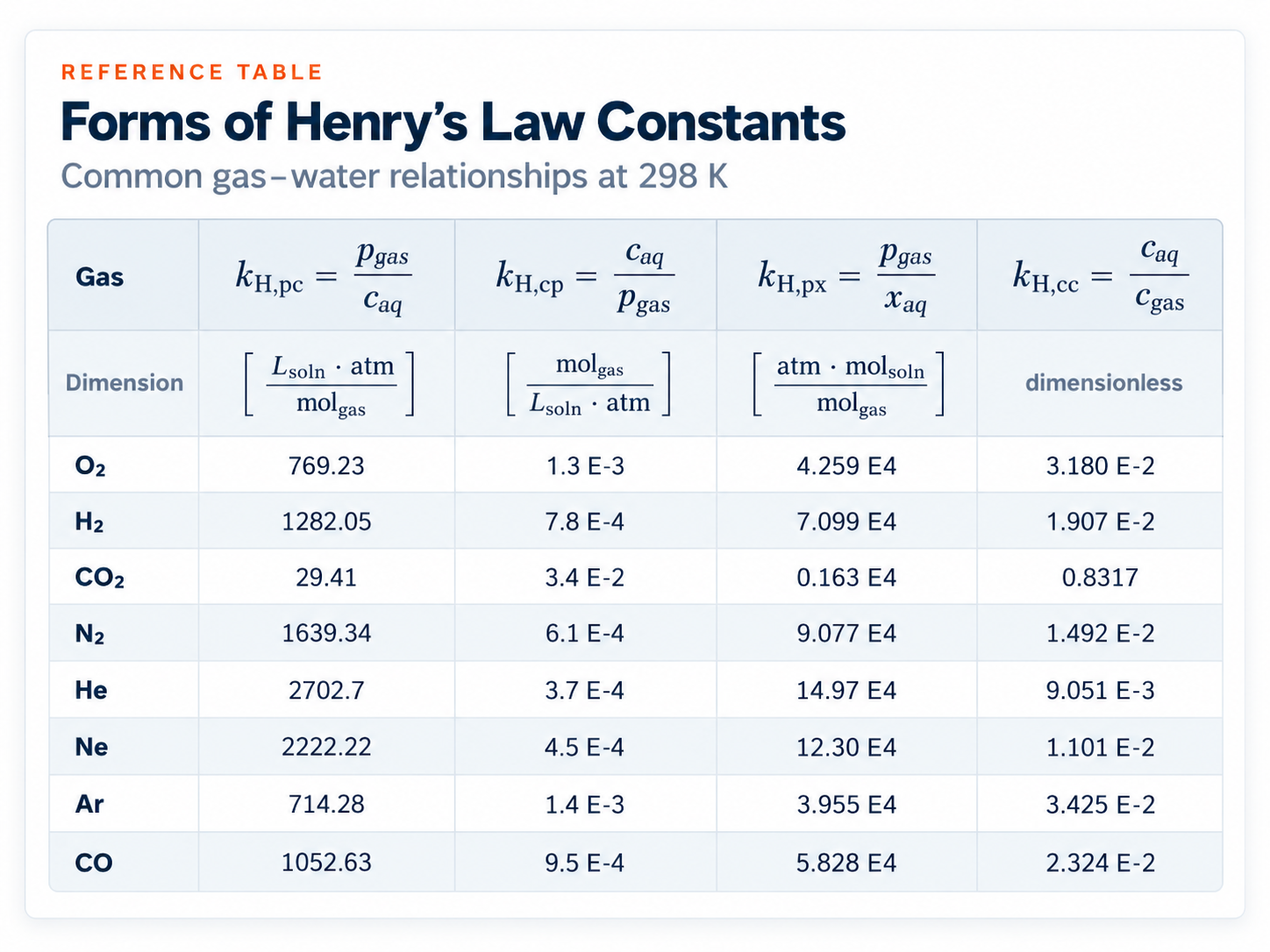
Forms of Henry's Law Constants Deloach Graphic
• THE SPECIFICS

Ion Exchange Treatment for Charged Contaminants

Ion exchange removes charged contaminants from water and helps protect critical systems such as boiler feed equipment and cooling towers.

 
01

Attract

Ion exchange resin attracts dissolved ions based on their electrical charge.
 
02

Exchange

Target ions are exchanged with ions held by the resin, leaving the removed contaminants attached to the resin.
 
03

Regenerate

Once saturated, the resin is backwashed, regenerated with a regenerating solution, and recharged for continued use.
 
Ion Exchange · Cation

Cation Resins Remove

Cations are positively charged ions. Cation exchangers use strong acid (SAC) or weak acid (WAC) resins depending on the treatment goal.
SAC: water softening and demineralization WAC: de-alkalization and demineralization
  Calcium (Ca2+)
  Chromium (Cr3+,Cr6+)
  Iron (Fe3+)
  Magnesium (Mg2+)
  Manganese (Mn2+)
  Radium (Ra2+)
  Sodium (Na+)
  Strontium (Sr2+)
 
Ion Exchange · Anion

Anion Resins Remove

Anions are negatively charged ions. Anion exchangers use strong base (SBA) or weak base (WBA) resins depending on the application.
SBA: demineralization
WBA: acid absorption
  Arsenic
  Carbonates (CO3)
  Chlorides (Cl-)
  Cyanide (CN-)
  Fluoride
  Nitrates (NO3)
  Perchlorate (ClO4-)
  PFOS
  PFOA
  Silica (SiO2)
  Sulfates (SO4)
  Uranium
• BETTER WATER QUALITY

Industrial Water Disinfection

Disinfection prevents bacterial growth that can damage industrial equipment or contaminate products. Water quality is especially critical in pharmaceutical, food, and beverage applications.


Cl

Chlorine

Kills and helps prevent bacteria. It is widely used, but chemical disinfection can alter water chemistry or affect taste.
 
O₃

Ozonation

Uses ozone to kill and help prevent bacterial contamination. Like other chemical treatments, it may further alter water chemistry.
 
UV

UV Light

A widely adopted alternative to chemical disinfection. UV treatment controls bacteria without adding chemicals that may affect water chemistry or taste.
• THE GUIDELINES

Maintaining Strict Water Quality Standards

Regular service and cleaning are essential to maintaining treatment performance and controlling operating costs.

✓

Inspect treatment towers

Inspect and clean decarbonation and degasification towers regularly.

✓

Protect gas-removal performance

Without proper maintenance, towers cannot efficiently remove gases such as H2S and CO2.

✓

Maintain media beds

Clean or replace media to prevent poor performance and system failure.

✓

Control operating costs

Maintenance schedules help control operating costs, which can rise significantly when systems are left unattended.

• Where Strict Water Quality Is Critical

When treated water becomes part of the process

Industrial water treatment is also used when water comes into direct contact with manufactured products. Semiconductor manufacturing may use treated water for surface cleaning, while pharmaceutical, food, and beverage applications may incorporate treated water directly into the final product.
Treatment may include:
Solids
Minerals
Iron
Mineral salts
Bacterial growth
 
• THE TREATMENT

Disposal & Off-Gas Treatment

Industrial wastewater treatment often mirrors the incoming treatment process. Regulatory requirements for reuse and disposal can require water to be treated to stringent quality standards before it is reused or discharged.
✓
Treat the water stream
Filtration, degasification, chemical pH adjustment, and membrane filtration may be used to return industrial water to a reuse or safe-to-discharge category. Reverse osmosis is commonly used for this purpose..
✓
Treat the air stream
Industrial processes can also generate contaminated air streams that may affect workers and corrode surrounding equipment or instrumentation. Corrosive gases such as H2S often require scrubber treatment before discharge.
!
Where gas neutralization matters: Gas neutralization is particularly important in applications such as semiconductor manufacturing and plating.
 
• Chemical Scrubber

Packed-Tower Chemical Treatment

A chemical scrubber uses a packed tower with a distribution system and randomly packed media. Depending on the application, the tower may use a single- or double-pass design..
 
✓
Proven and widely used
✓
Handles variable loads
✓
Effective at  absorbing gases
 
• Biological Scrubber

Biological Gas Treatment

A biological scrubber uses a packed tower and a cultured bacteria colony to digest contaminants in the gas stream rather than relying on a recirculating chemical reagent.
 
✓
Lower cost, simpler system
✓
Uses naturally bacteria
✓
Slower to adjust 
 

Conclusion

Whether industrial water is converted to steam, used for cleaning, rinsing or treatment, or incorporated into a final product, the treatment system must be designed around the application and required water quality.


Water treatment and off-gas treatment work together to protect equipment, support process requirements, and produce the water quality each application demands. DeLoach Industries manufactures a range of treatment equipment and systems that design professionals can use to build application-specific solutions.


• A Cleaner Tomorrow

The Right Treatment Supports the Entire Process.

Protects equipment & products

Helps reduce corrosion, scaling, bacteria, and harmful contaminants.

Supports required standards

Helps achieve the water quality needed for processing, reuse, or disposal.

Fits the application

Treatment processes and equipment are selected around the specific water and operating requirements.
 
Water Treatment Designed Around the Application

Need Help With Your Water Treatment Project?


Talk to a Water Treatment Professional
DeLoach Industries


DeLoach Industries designs water treatment, wastewater treatment, odor control, and air emission control systems for municipal and industrial facilities across the United States.

  • Services
    • Design Services
    • Manufacturing
    • Field Services
    • Pisciculture
  • Capabilities
    • Water Treatment
    • Wastewater
    • Odor Control
    • Aqua farming
  • Products
    • Filtration
    • AI Controls
    • Replacement Parts
  • Resources
    • Industrial Water Treatment Guide
    • Odor Control & Air Emissions Guide
    • Odor Control Scrubber E-Book
    • PFAS & PFOA Forever Chemicals
    • Degasification Webinar
    • DeLoach Blog
  • Company
    • About Us
    • Contact Us
    • Careers
    • Become a Partner

Copyright © 2026.   Website by Nextiny