
Pisciculture & Aqua Farming
• AQUACULTURE SYSTEMS
Better Water.
Better Aquaculture.
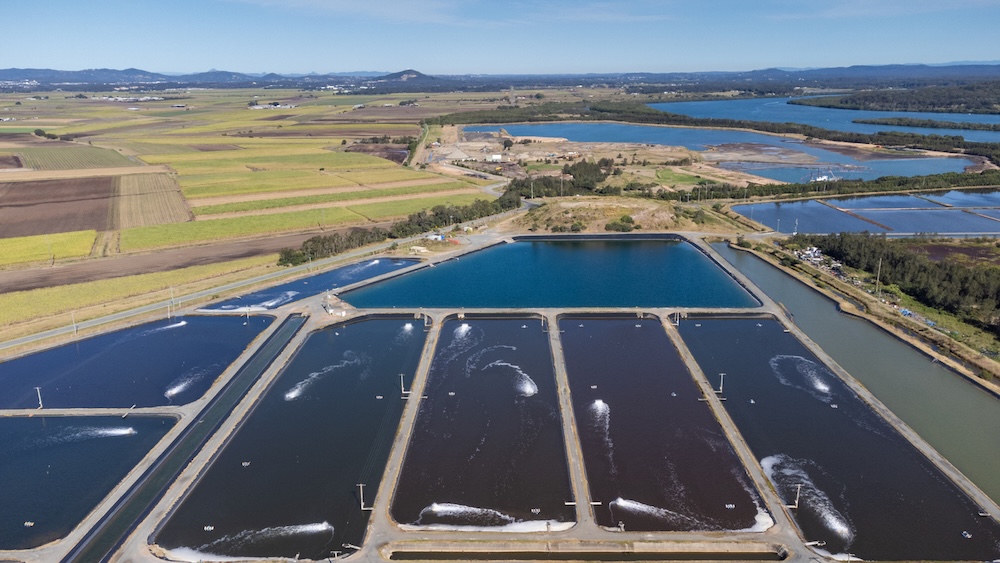
Aquaculture depends on consistent water quality. DeLoach designs and builds treatment systems for salt, brackish, and freshwater operations to help keep aquatic life healthy and harvested products safe.
"The oldest and most respected pisciculture, water, and wastewater manufacturer in the USA"
• THE MARKET
Aquaculture Is Growing Fast
Demand for seafood and high-quality protein continues to drive aquaculture growth worldwide. The U.S. imports an estimated 86% of its seafood, while China, India, and Vietnam remain major producers.
• KEY TERMS
Aquafarming, Mariculture & Pisciculture
• INDUSTRY EVOLUTION
Aquafarming Has Deep Roots
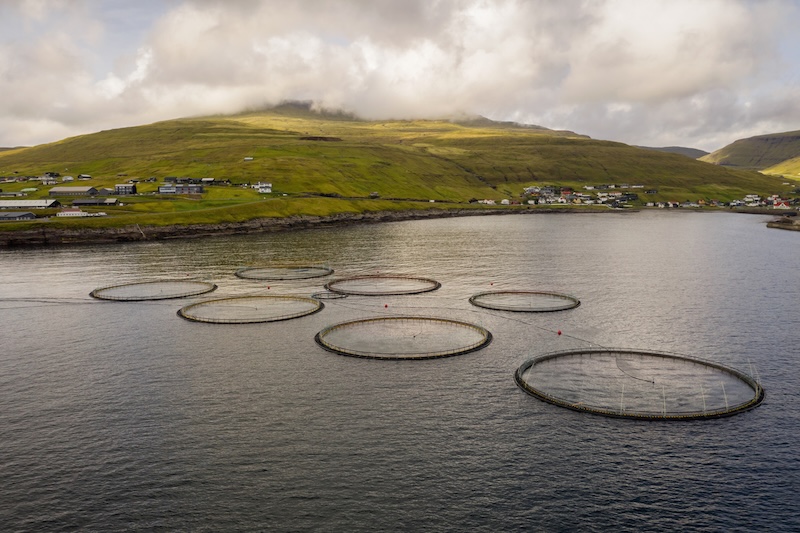
Aquafarming has supported food production for thousands of years. What has changed is the scale: modern operations now raise species such as salmon, catfish, and tilapia using more advanced production and treatment systems.
In the U.S., commercial farms must meet strict standards for contaminants, disease, and harmful bacteria. That makes water quality and disease control central to protecting the harvest.
• WHAT WE DO
Water Quality First
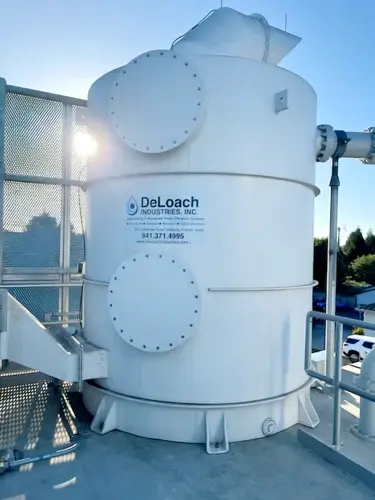
DeLoach designs custom water treatment systems for salt, brackish, and freshwater pisciculture. Systems can include degasification and decarbonation air stripping towers, pressure filtration, UV disinfection at 254 nm, and complete membrane or reverse-osmosis packages.
We Remove
When membrane filtration or reverse osmosis is required, systems can be designed for flows scaling into millions of gallons per day.
• THE PROCESS
How the Water is Treated
Carbon filtration can be useful for freshwater applications, but media replacement or regeneration adds cost. It is best reserved for final polishing after bulk contaminants have been removed through degasification and filtration.
• THE CHEMISTRY
Why pH Matters
Degasification removes H2S and CO2, which can raise pH by about 1–1.5. When iron is also present, adjusting the pH to 7 promotes oxidation so the iron can be removed through pressure filtration.
| No. | Acid | Ka | pKa |
|---|---|---|---|
| 1 | Hydroiodic acid (HI) | 3.16×10⁹ | -9.5 |
| 2 | Hydrobromic acid (HBr) | 1.0×10⁹ | -9 |
| 3 | Hydrochloric acid (HCl) | 1.0×10⁶ | -6 |
| 4 |
Sulfuric acid (H2SO4)
Used to Adjust pH
|
1.0×10³ | -3 |
| 5 | Hydronium ion (H3O+) | 55 | -1.74 |
| 6 | Nitric acid (HNO3) | 28.2 | -1.45 |
| 7 | Trifluoroacetic acid (CF3COOH) | 5.62×10⁻¹ | 0.25 |
| 8 | Oxalic acid (HOOC–COOH) | 5.37×10⁻² | 1.27 |
| 9 | Acetic acid (CH3COOH) | 1.75×10⁻⁵ | 4.76 |
• GROWING CONDITIONS
Keep Water at the Right Temperature
Different species require different water temperatures. Cold-water operations may use chillers, while warm-water systems can use heat pumps, solar thermal, and heat exchangers. Cooling or degasification towers can remove excess heat.
Cool it down
Many operations also fine-tune temperature and lighting around feeding behavior to support natural growth.
• SAFETY
Prevent Disease Before It Spreads
Bacteria and disease can move quickly through an aquaculture operation. Closed systems, UV treatment, and single-pass flow provide greater control and make it easier to isolate a tank if a problem appears.
• REFERENCE
Top Farmed Species
A snapshot of the 15 most-cultured fish species by weight, based on FAO 2013 data.
| Species | Environment | Tonnage (M) | Value (US$B) |
|---|---|---|---|
| Grass carp | Freshwater | 5.23 | 6.69 |
| Silver carp | Freshwater | 4.59 | 6.13 |
| Common carp | Freshwater | 3.76 | 5.19 |
| Nile tilapia | Freshwater | 3.26 | 5.39 |
| Bighead carp | Freshwater | 2.90 | 3.72 |
| Catla (Indian carp) | Freshwater | 2.76 | 5.49 |
| Crucian carp | Freshwater | 2.45 | 2.67 |
| Atlantic salmon | Marine | 2.07 | 10.10 |
| Roho labeo | Freshwater | 1.57 | 2.54 |
| Milkfish | Freshwater | 0.94 | 1.71 |
| Rainbow trout | Fresh, brackish, marine | 0.88 | 3.80 |
| Wuchang bream | Freshwater | 0.71 | 1.16 |
| Black carp | Freshwater | 0.50 | 1.15 |
| Northern snakehead | Freshwater | 0.48 | 0.59 |
| Amur catfish | Freshwater | 0.41 | 0.55 |
Planning an Aquaculture Treatment System?
Talk with DeLoach about your water source, purification needs, and the treatment process best suited to your operation.