
Odor Control & Air Emissions Guide
• Established in 1959
"The oldest, most respected water, wastewater, and odor control and air emission manufacturer in the USA."
Odor control and air emissions cover many types of off-gas contaminants that are regulated by law, by standard, or simply by need. These emissions show up as some form of off-gas condition, whether noxious, corrosive, or dangerous to people and animals.
Because of those risks, air emissions and the processes that create them are carefully regulated in many countries, and the United States maintains the most stringent requirements of all. This guide looks at the common odor control problems tied to off-gas emissions, and the treatments used today to process them, stay compliant, and keep working environments safe.
• THE SOURCES
Common Sources of Air Emissions
• SYSTEM CONFIGURATION
Scrubber Sizes & Materials
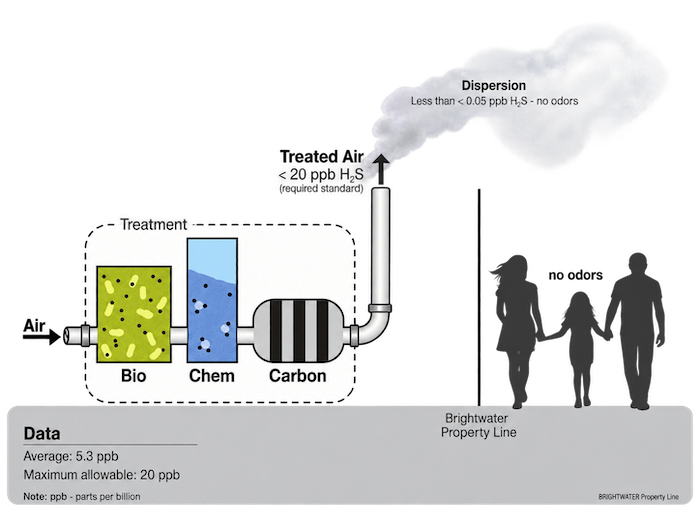
The industry has developed a range of processes to capture, treat, and neutralize odors and off-gas emissions. These systems are commonly called odor control scrubbers, and they let facilities operate safely and stay in regulatory compliance.
Most scrubbers are vertically packed towers, though some are shorter and shaped more like a box, for indoor use or where height is restricted. Vertical towers can be built from steel, stainless steel, fiberglass, or PVC. Steel units are typically lined with a rubber or epoxy coating, while the other materials usually need no internal corrosion protection.
Across every shape and size, the common thread is the same: bring the contaminated airflow into contact with a treatment process.
• THE PROCESS
How Scrubbers Treat Air
Vertical Tower
Chemical scrubber
Horizontal Flow
• TREATMENT SOLUTIONS
Chemical vs. Biological Scrubbers
• Chemical
Industrial chemical scrubbers
• Biological
Biological scrubbers
• WHAT TO CONSIDER
Choosing the Right Scrubber
Selection means balancing performance against capital cost, operating cost, and ease of operation. The capital cost of the equipment is often the smallest part of the equation, so the decision is usually best left to experienced design professionals. Choose the wrong scrubber and it can underperform and leave untreated emissions, while also carrying a high operating cost, heavy maintenance, and frequent media cleaning or replacement.
Understand the parameters first
Knowing the dos and don'ts up front protects your equipment and electronics and can save thousands of dollars. Understand where the odorous gas comes from and how it is produced, how the system will be operated, and what makeup water is available. Water that is too hard can cause scaling and fouling of the media bed, an expensive problem to repair.
Makeup water, the recirculation solution, and the media-bed pH all need to be maintained. For a biological scrubber, makeup water that is hostile to the colony can reduce performance or kill it, so many variables should be examined carefully before selecting a system and its components
• AUTOMATION & MONITORING
Smarter Odor Control With AI
A scrubber failure can shut down a food plant, a semiconductor line, or an entire water treatment process, leaving a community without water. To help avoid costly shutdowns and breakthroughs, DeLoach Industries is building smart odor control equipment with artificial intelligence integrated into the systems it manufactures.
With AI, a scrubber can order its own chemicals when needed, notify a service provider when conditions change, and alert the operator with information. Letting the equipment monitor itself beyond normal controls improves uptime and reliability, prevents property damage, and helps safeguard people and the environment.
• BUILT BY DELOACH
Odor Control Systems
We Manufacture
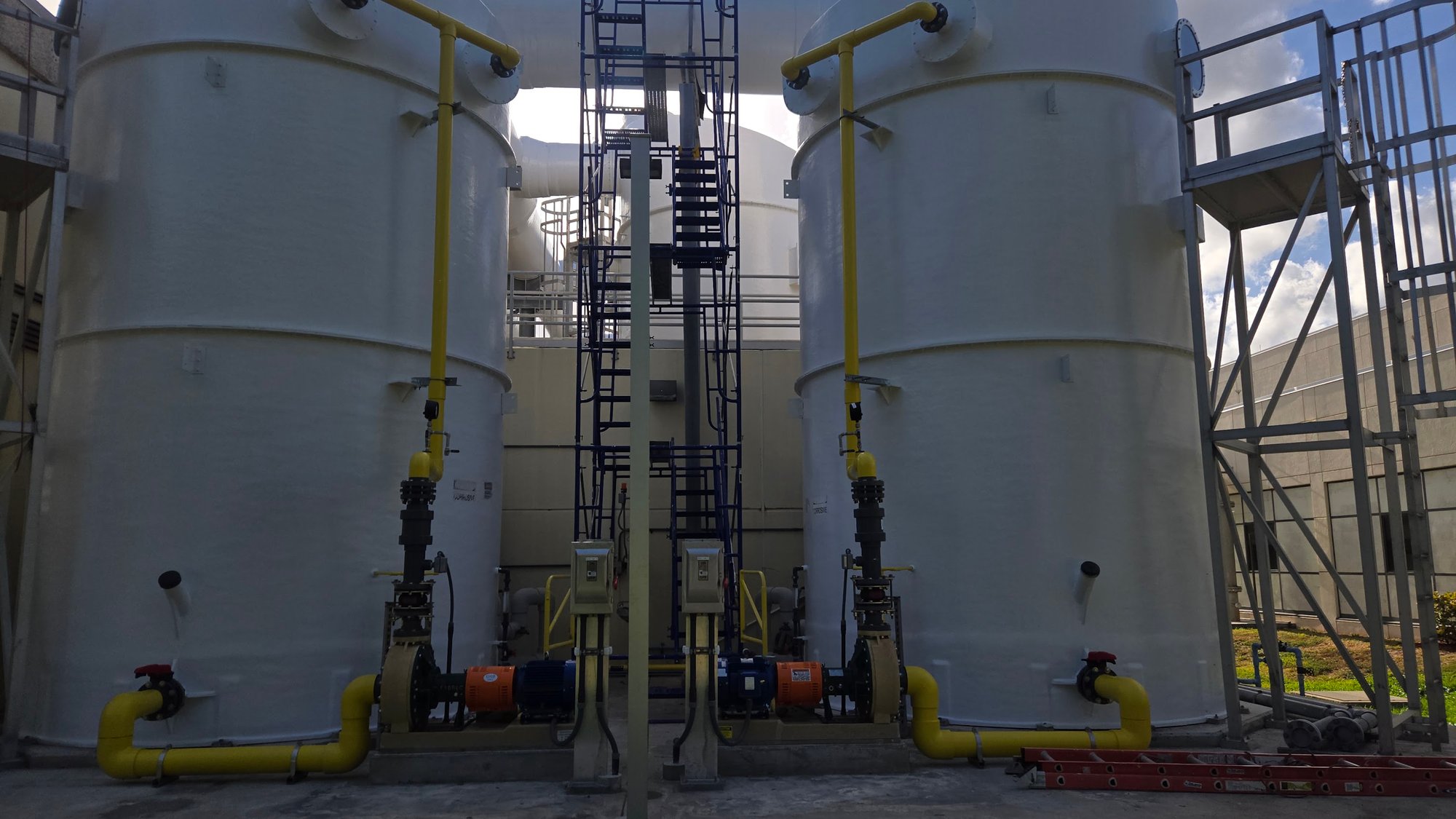
DeLoach Industries brings more than 50 years of experience supplying petrochemical and other customers with engineered packaged systems for harsh environments, designed, manufactured, and shipped around the world. Every odor control system comes with complete design support, installation, startup training, and long-term operation and maintenance.
We specialize in these products to combat odors and reduce air emissions:
• READY TO INSTALL
Pre-packaged Scrubber Systems
DeLoach offers a complete line of pre-packaged odor control scrubbers for municipal, food, and industrial markets, built into containers or structures for local or overseas shipping. The range runs from simple HEPA air filtration to complex chemical and biological scrubbers, plus a proprietary line of closed-loop and low-profile systems. Our biological scrubbers remove H2S, VOCs, and other odors with high efficiency and corrosion resistance, minimizing chemical use and keeping operating costs low. Each system is sized to the customer, fully packaged with automation, and available skid-mounted or for slab installation.
Planning a Treatment Project?
Talk with a DeLoach professional today.