
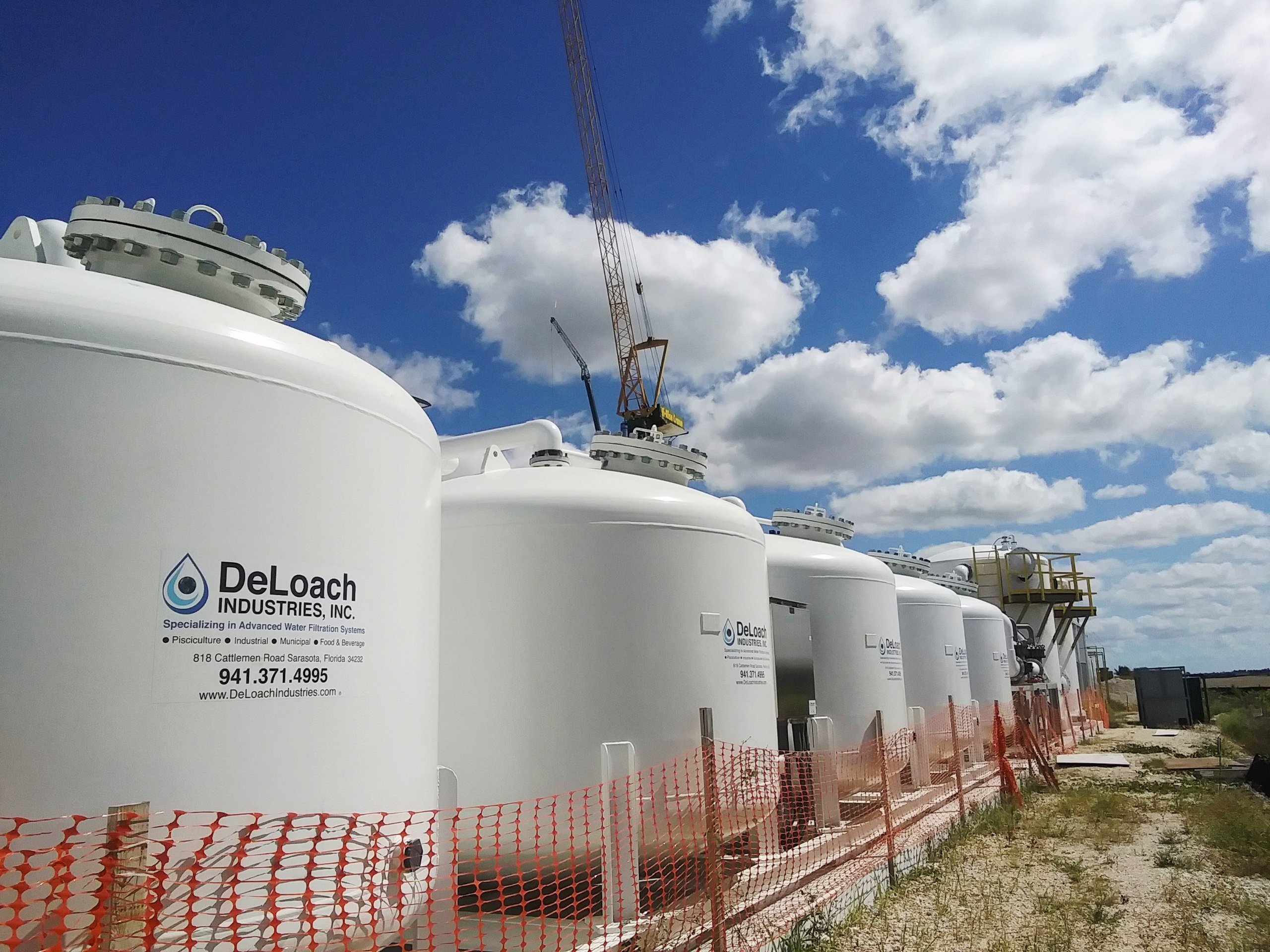
Industrial operations depend on clean, reliable water to maintain efficiency, protect equipment, and meet environmental regulations. Whether in manufacturing, refining, or energy production, contaminated water can lead to costly downtime, compliance violations, and equipment damage.
That’s where industrial pressure filters stand out.
Designed for high-performance filtration under demanding conditions, pressure filters offer a powerful, cost-effective solution for removing suspended solids, reducing contaminants, and improving overall water quality. As part of comprehensive industrial water treatment solutions, these systems are critical to modern process design.
Why Industrial Water Filtration Matters
Industrial processes generate wastewater that often contains:
- Suspended solids
- Oils and hydrocarbons
- Heavy metals
- Chemical residues
- Organic contaminants
Without proper treatment, these contaminants can:
- Damage downstream equipment (e.g., pumps, membranes)
- Reduce system efficiency
- Increase maintenance costs
- Violate environmental discharge regulations
High levels of water turbidity can further impact system performance by increasing chemical demand and reducing filtration efficiency.
Learn how turbidity impacts your system performance
👉 [Explore Water Turbidity Insights]
Industries that rely heavily on filtration include:
- Manufacturing and fabrication
- Semiconductor production
- Oil and gas operations
- Chemical processing
- Power generation
- Municipal and industrial wastewater facilities
Effective filtration is essential for operational continuity and regulatory compliance.
Types of Industrial Water Filtration Systems
Several filtration technologies are used in industrial environments, each with unique advantages and limitations.
Pressure Filters
Pressure filters are enclosed systems that force water through filtration media using pressurized flow. They are widely used due to their efficiency, compact design, and ability to handle high flow rates.
Two primary types include:
- Multimedia pressure filters
- Micron (cartridge) filters
Gravity Filters
Gravity filters rely on water flowing downward through media layers without the application of pressure.
Limitations include:
- Lower filtration efficiency
- Larger footprint requirements
- Higher risk of clogging
- Slower processing rates
Constructed Wetlands
Constructed wetlands use natural biological and physical processes to treat wastewater.
While environmentally friendly, they are:
- Space-intensive
- Slow to process water
- Not ideal for most industrial applications requiring precision filtration
How Industrial Pressure Filters Work
Pressure filtration systems operate within a sealed vessel. Water enters under pressure and is forced through layers of filtration media.
Process overview:
- Contaminated water enters the vessel
- Water passes through multiple media layers
- Suspended solids are trapped within the media
- Clean water exits through an underdrain system
DeLoach designs advanced filtration systems and pressure filter technologies to optimize this process across industrial applications.
Key Benefits of Industrial Pressure Filters
High Filtration Efficiency
Multimedia pressure filters typically remove particles down to 10–20 microns, while cartridge filters can achieve 0.1–1 micron filtration.
Faster Processing Speeds
Because water is forced through the media under pressure:
- Higher flow rates are achieved
- Processing time is reduced
- Systems can handle large volumes efficiently
Lower Operating Costs
Pressure filters are cost-effective due to:
- Reduced energy consumption
- Minimal chemical usage
- Long media life (with proper maintenance)
They also protect downstream systems, such as reverse osmosis and water demineralization, reducing overall operating costs.
Need help choosing the right filtration system?
👉 [Talk to a Filtration Expert]
Compact System Design
Unlike gravity filters or wetlands, pressure filters:
- Require significantly less space
- Integrate easily into existing systems
Reduced Maintenance and Downtime
Pressure filters minimize clogging through:
- Backwashing capabilities
- Layered media filtration
- Controlled flow distribution
Multimedia Pressure Filters Explained
Multimedia filters use multiple layers of media to capture a wide range of particle sizes.
Common media combinations include:
- Gravel + sand
- Gravel + sand + anthracite
- Greensand + sand + anthracite
Each layer serves a purpose:
- Anthracite: captures larger particles
- Sand: filters finer solids
- Greensand: removes iron and manganese
Example:
A manufacturing facility may use multimedia filtration to reduce turbidity and protect downstream systems from fouling.
Micron and Cartridge Filters in Industrial Systems
Cartridge filters provide fine filtration and are often used as a secondary stage.
Typical applications:
- Pre-treatment for reverse osmosis systems
- Final polishing filtration
- Protection of sensitive equipment
Capabilities:
- Filtration down to 0.1 microns
- High precision contaminant removal
See how filtration supports advanced treatment systems
👉 [Learn About Water Demineralization]
Best practice: Use cartridge filters downstream of multimedia filters to extend cartridge life and improve performance.
Pressure Filters vs. Gravity Filters
|
Feature |
Pressure Filters |
Gravity Filters |
|
Filtration Speed |
High |
Low |
|
Efficiency |
High |
Moderate |
|
Footprint |
Compact |
Large |
|
Maintenance |
Lower |
Higher |
|
Clogging Risk |
Lower |
Higher |
Pressure filters outperform gravity systems in most industrial environments.
Applications Across Industries
Industrial pressure filters are used in:
Oil & Gas
- Produced water treatment
- Pre-treatment before reinjection
Manufacturing
- Process water filtration
- Cooling system protection
Power Plants
- Boiler feedwater pre-treatment
- Cooling tower filtration
Municipal & Industrial Wastewater
- Tertiary filtration
- Effluent polishing
Semiconductor & High-Tech
- Ultra-clean water preparation
Environmental and Compliance Benefits
Proper filtration helps facilities:
- Meet environmental discharge standards
- Reduce chemical usage
- Improve sustainability
Filtration systems also support emerging treatment needs, such as PFAS removal, which is becoming increasingly important in regulated industries.
When to Choose Pressure Filtration
Pressure filters are ideal when you need:
- High flow rates
- Consistent water quality
- Compact design
- Cost-effective operation
They are especially valuable as pre-treatment for advanced systems like reverse osmosis and demineralization.
Why Pressure Filters Are a Smart Investment
Industrial pressure filters remain one of the most effective and versatile solutions for water treatment.
They offer:
- Proven filtration performance
- Lower operational costs
- Scalable system design
- Reliable protection for critical equipment
Talk to the Experts at DeLoach Industries, Inc.
Choosing the right filtration system requires expertise and precision.
At DeLoach Industries, Inc., we provide:
- Custom system design
- Equipment selection guidance
- Full engineering support
- Turnkey water treatment solutions
Ready to improve your water treatment system?
👉 [Get a Custom Filtration Solution]
Call 941.371.4995 to speak with a professional today or visit DeLoach Industries to learn more about our industrial water treatment solutions.