
Understanding the Importance of Removing Dissolved Gases
Dissolved gases like carbon dioxide (CO2) and hydrogen sulfide (H2S) can significantly impact water quality in various industrial and municipal applications. The presence of CO2 in water can lower the pH, making the water more acidic, which can lead to corrosion in pipes and equipment. On the other hand, H2S is notorious for its foul odor and corrosive nature, posing both operational and health hazards.
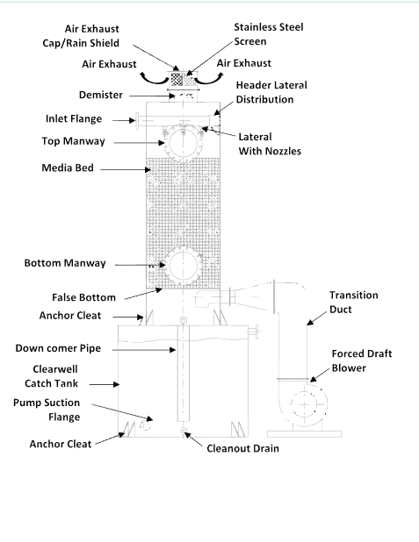
How Degasification and Decarbonation Systems Work
Degasification and decarbonation systems are designed to remove these dissolved gases efficiently. Degasifiers and decarbonators often utilize packed-tower designs, where water flows downward through a packed bed while air is blown upward, stripping the gases from the water. Forced-draft and induced-draft systems are commonly used methods, each with its specific applications and advantages.
Forced-draft systems blow air through the water to remove gases, whereas induced-draft systems create a vacuum to achieve the same effect. Both methods are highly effective, with properly designed systems capable of removing up to 99.99% of CO2 and H2S.
Benefits of Using Degasification and Decarbonation
The benefits of using degasification and decarbonation systems are manifold. By removing CO2, these systems help stabilize the pH of the water without the need for additional chemicals like caustic soda. This results in high-purity water, which is essential for many industrial processes.
Removing H2S not only eliminates the associated odor but also prevents the formation of sulfuric acid, which can corrode metal surfaces. This is particularly important in applications like boiler feed water, where the presence of H2S can severely damage the system.
There are several methods for degasification and decarbonation, each with its own set of pros and cons:
Forced or Induced Draft Decarbonation:
Pros: Lowest cost, highest efficiency
Cons: Requires regular maintenance
Vacuum or De-aeration:
Pros: Highly effective at removing dissolved gases
Cons: Higher capital and operating costs
Membrane Degasification:
Pros: Efficient and compact
Cons: Highest capital and operating costs
Choosing the right method depends on various factors like the total inlet water flow rate, inlet feed temperature, ambient air temperature, and the desired effluent removal levels.
Impact on pH Levels and Ion Exchange Processes
One of the primary reasons for utilizing a decarbonator is to raise the pH of the water without adding caustic chemicals. This is crucial for processes that require high-purity water. Additionally, removing CO2 before ion exchange treatment reduces the regeneration cycles for resin beds, thereby extending their lifespan and reducing operational costs.
High concentrations of CO2 can consume the ion charge within the resins, necessitating more frequent regeneration cycles. By removing CO2, degasification systems help maintain the efficiency and longevity of ion exchange resins.
DeLoach Industries' Advanced Solutions and Expertise
DeLoach Industries has been at the forefront of designing and manufacturing advanced degasification and decarbonation systems for over 60 years. Our systems are custom-engineered to meet the specific needs of various industries, including municipal water systems, industrial facilities, and aquaculture operations.
We offer a range of solutions, from packed-tower degasifiers to advanced ion exchange and membrane filtration systems. Our expertise extends to providing turnkey design, installation, and long-term support, ensuring that our clients achieve optimal water quality with minimal operational costs.
For more information on our advanced water treatment solutions or to explore our range of degasification and decarbonation systems, visit DeLoach Industries or contact our experts at (941) 371-4995.