Aeration, Decarbonation, or Degasification? How to Choose the Right Water Treatment System — and Avoid Costly Mistakes

Topics: degasification, aeration, Decarbonation, municipal water systems, DeLoach Industries, wastewater treatment systems, Industrial water treatment, aeration system, CO2 removal, hydrogen sulfide removal, degasifier tower, pH control system, carbon dioxide stripping
Topics: degasification, hydrogen sulfide (H2S), Decarbonation, dissolved gases, municipal water systems, DeLoach Industries, Inc., Ion exchange, Forced Draft Degasification, induced draft degasifier, water ph
Understanding Degasification and Decarbonation
In industrial and municipal water treatment systems, controlling dissolved gas levels is crucial for maintaining optimal performance, ensuring safety, and ensuring compliance. The term “Degasification” (or “Decarbonation”) refers to the process of removing unwanted gases such as hydrogen sulfide (H₂S), carbon dioxide (CO₂), and oxygen (O₂) from water.
While both processes share the same purpose of gas removal, the terminology changes based on the type of gas being targeted:
Decarbonation is typically used when removing carbon dioxide (CO₂).
- Degasification most often refers to the removal of hydrogen sulfide (H₂S) or other dissolved gases.
These processes are a critical step in water treatment, especially when preparing water for reverse osmosis (RO), boiler feed systems, or industrial reuse applications.
How Degasification Works
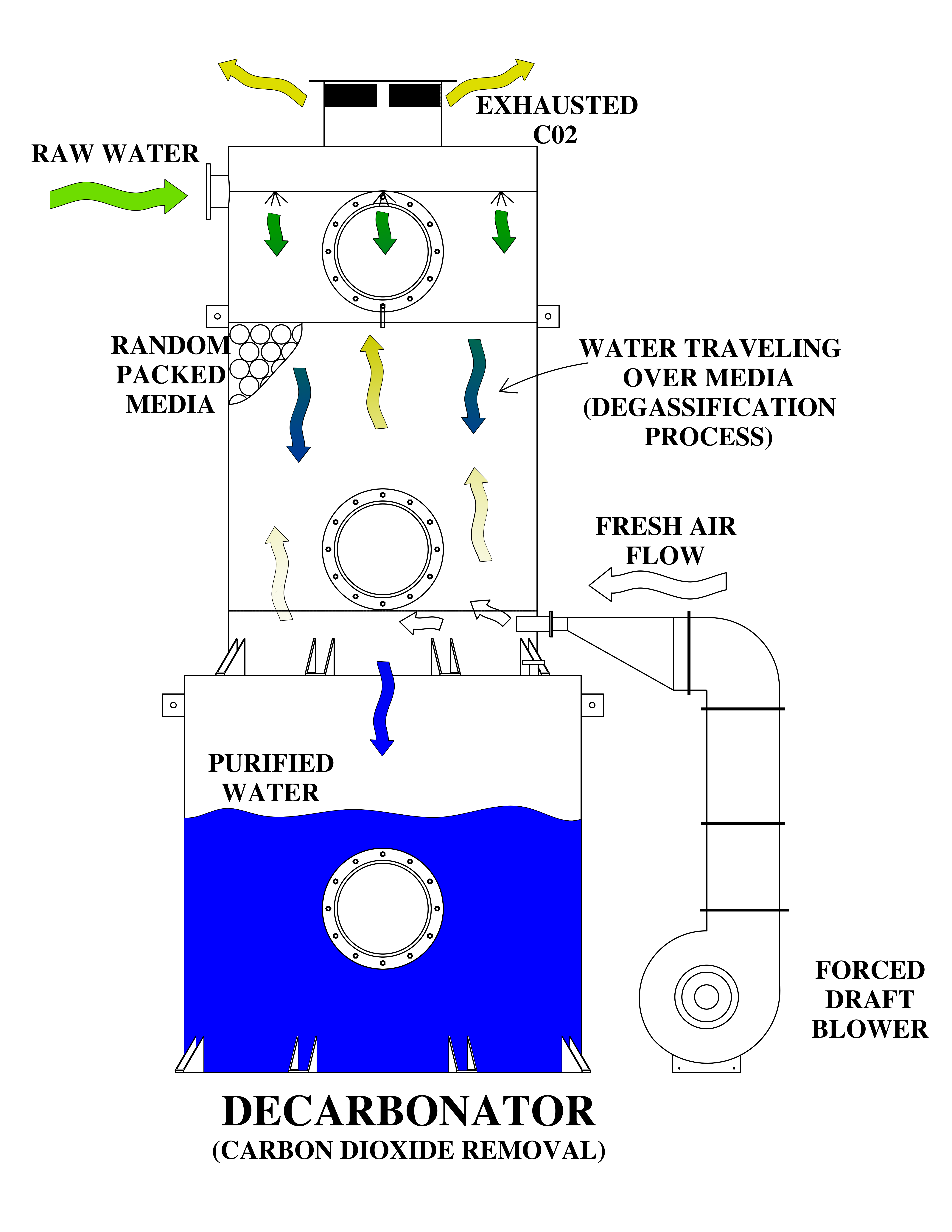
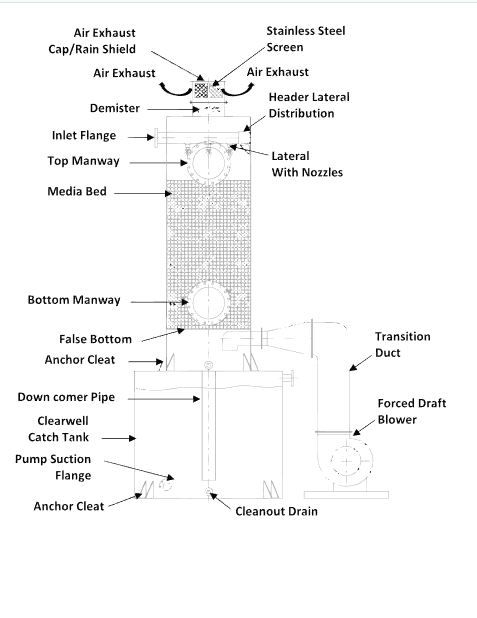
Degasification operates on the principle of transferring gases from water into the air. By forcing air through the water stream inside a degasification or decarbonation tower, the system promotes mass transfer, allowing the unwanted gases to escape.
Key factors influencing degasification efficiency
- Inlet Water Flow Rate: Higher flow rates require larger towers or more efficient packing media.
- Water Temperature: Warmer water releases gases more readily.
- Ambient Air Temperature: Impacts air density and transfer rate.
- Gas Concentration: Measured in ppm, ppb, or mg/L, this determines the tower’s design and airflow volume.
- Desired Effluent Levels: Defines the level of purity required for downstream applications.
Understanding these variables enables engineers to design a customized degasification system that meets stringent quality standards. For example, systems treating well water high in hydrogen sulfide must maintain consistent airflow and contact time to ensure complete removal of the gas.
To learn more about custom-engineered degasification systems, visit DeLoach Industries.
Applications: Reverse Osmosis and Membrane Filtration
Degasification is often integrated after Reverse Osmosis (RO) or membrane filtration to remove residual gases that pass through the membrane, such as H₂S and CO₂.
By eliminating these gases before chlorination, operators can significantly reduce chlorine consumption, improving disinfection efficiency and minimizing chemical costs.
Removing dissolved gases also enhances TSS performance, resulting in clearer, higher-quality permeate.
When CO₂ is removed, the pH naturally rises, helping stabilize the water without the need for caustic chemicals or lime, making degasification an eco-friendly solution for optimizing water treatment.
For a deeper dive into membrane treatment post-processes, explore DeLoach Industries’ water treatment solutions.
Managing Off-Gas and Odor Control
In some cases, the air discharged from a degasification or decarbonation tower can contain elevated H₂S levels, creating odor nuisances or even health and safety hazards for nearby personnel.
Hydrogen sulfide, when combined with moisture, forms sulfuric acid, which corrodes nearby equipment and building materials. This makes off-gas treatment essential in steam processes, boiler feed systems, and industrial wastewater applications.
To mitigate emissions, facilities often install air scrubbers or odor control systems directly onto the off-gas line. These scrubbers use chemical or biological media to neutralize odors and capture harmful gases before release.
DeLoach Industries offers custom-engineered odor control and degasification solutions that integrate seamlessly with your existing treatment systems. Learn more about industrial water treatment technologies at www.deloachindustries.com.
The Economic and Environmental Benefits of Degasification
Degasification systems are not only effective, they’re also highly economical compared to chemical treatment methods.
Some key advantages include:
- Reduced chemical usage and maintenance costs
- Extended equipment life by preventing corrosion
- Improved water quality consistency
- Compliance with EPA and OSHA air quality standards
In municipal systems, this can translate into lower operational costs and enhanced environmental performance, especially when paired with other sustainable technologies, such as odor-control scrubbers and biotrickling filters.
Partner with DeLoach Industries for Advanced Water Treatment Solutions
For over 65 years, DeLoach Industries has been a trusted leader in designing and manufacturing custom degasification, decarbonation, and odor control systems for industrial and municipal clients worldwide.
Whether you need to remove hydrogen sulfide, naturally raise pH levels, or enhance the performance of your reverse osmosis system, our team can design a customized solution that meets your exact specifications.
Contact DeLoach Industries today at (941) 371-4995 to request a quote or speak with a water treatment expert.
Topics: degasification, water treatment, hydrogen sulfide (H2S), Decarbonation, carbon dioxide, degasifier, removal of CO2 from water, DeLoach Industries, Inc., Industrial water treatment, Water Treatment Technologies, membrane filtration
The Evolution of Water Treatment Technologies
Topics: water treatment issues, degasification, water treatment, Decarbonation, degasifier, decarbonation of water, DeLoach Industries, Inc., Industrial water treatment, Water Treatment Technologies
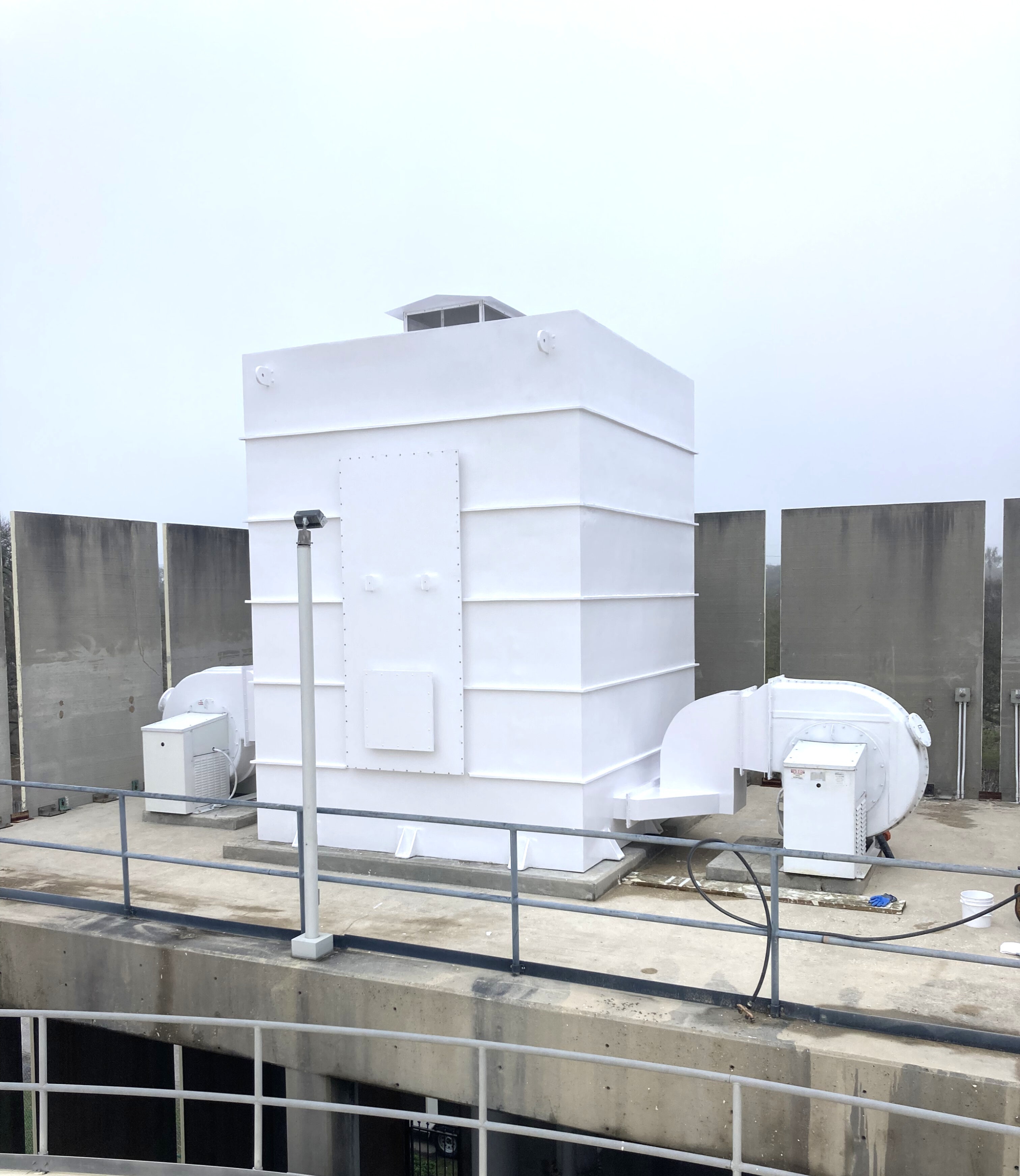
Water decarbonation, also known as degasification, is the process of removing carbon dioxide (CO2) from water. This procedure is essential in various sectors, including aquaculture, municipal water treatment, industrial processes, and the food & beverage industry. The presence of CO2 in water can lead to multiple problems, including equipment corrosion, reduced efficiency in water treatment systems, and negative impacts on aquatic life.
Topics: water treatment issues, degasification, water treatment, Decarbonation, degasifier, removal of CO2 from water, CO2 in water, decarbonation of water, DeLoach Industries, Inc., Henry's Law
In modern industrial water treatment, advancements in technology and processes have revolutionized the way contaminants are removed from water.
This blog explores the integration of NSF/ANSI 61 certified systems, artificial intelligence in water treatment, and cutting-edge processes such as decarbonation and degasification. We'll also discuss the key differences between forced draft and induced draft degasification towers, helping you make informed decisions while designing your Industrial Water Treatment System.
NSF/ANSI 61-Certified Water Treatment Systems: To ensure the safety and quality of water treatment equipment, NSF/ANSI 61 certification has become a crucial standard. This certification verifies that materials and components used in water treatment systems comply with health and safety requirements. When selecting a water treatment solution, opting for NSF/ANSI 61 certified systems guarantees peace of mind and adherence to the highest industry standards.
Harnessing Artificial Intelligence in Water Treatment: Artificial intelligence (AI) has penetrated various industries, and water treatment is no exception. Integrating AI into water treatment processes allows for more efficient and optimized operations. AI-driven systems can monitor water quality in real-time, predict system failures, optimize chemical dosing, and reduce energy consumption. By leveraging AI technologies, water treatment facilities can enhance their overall performance and streamline resource utilization.
Decarbonation and Degasification Systems: Decarbonation and degasification are essential processes in industrial water treatment, particularly in pH levels in water and the ability to control removing the contaminants. These processes target the removal of carbon dioxide (CO2) and other dissolved gases from water to improve its quality. Two key systems used for this purpose are the decarbonator and aeration system.
Topics: degasification, advanced treatment solutions, biological scrubber, NSF/ANSI 61, Chemical Odor, Decarbonation, Safe drinking water, De-Aeration, decarbonator, degasifier, degassed water, ansi61, nsf/ansi61, Deagasification, decarbonation of water, DeLoach Industries, Inc., Drinking Water, Industrial Odor Control, DeLoach Industries, contaminants, process system, safe drinking water act, drinking water standards, environmental safety, air emissions, Forced Draft, Induced Draft
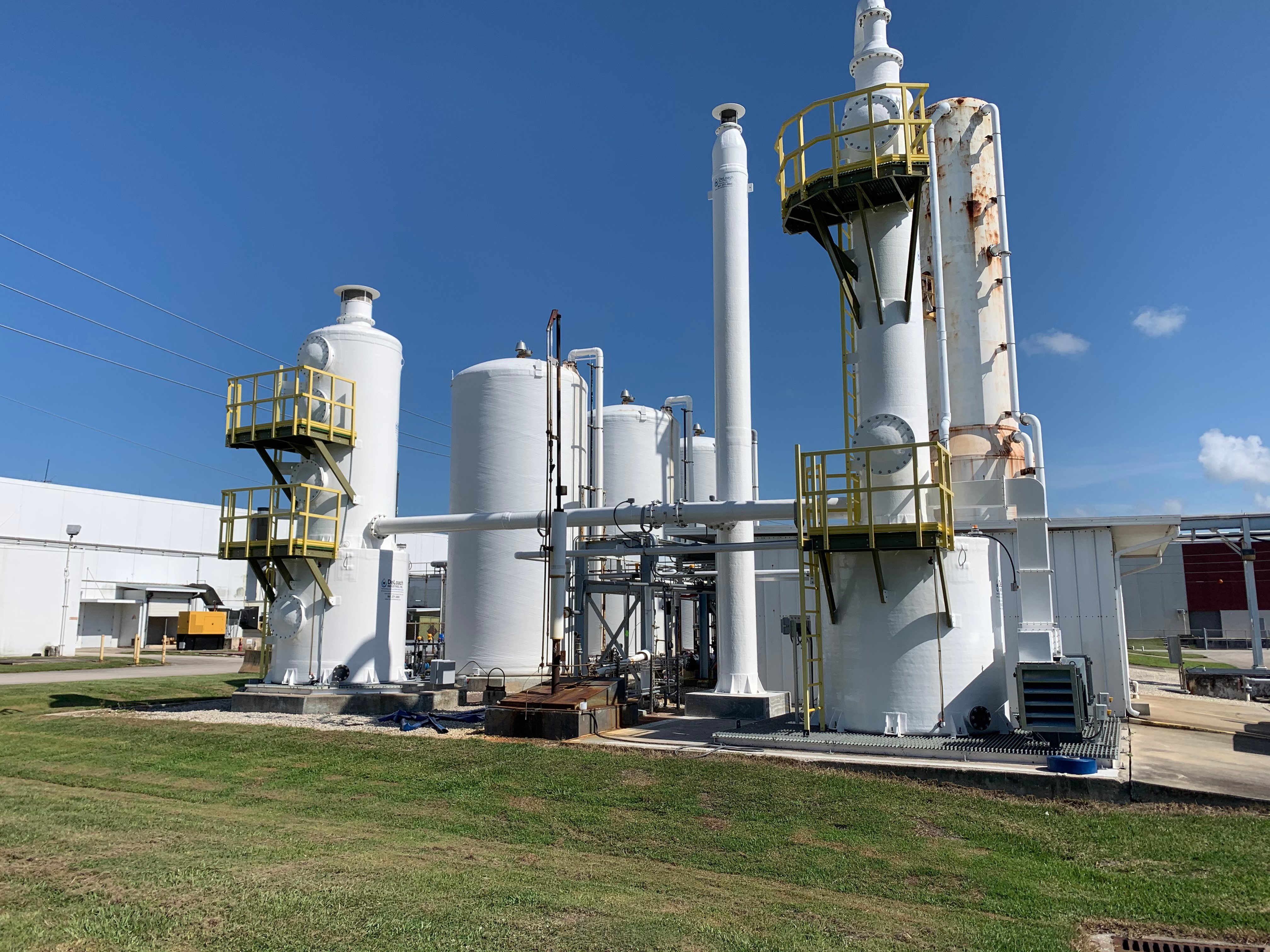
Degasification and decarbonation are essential processes in water treatment that play a crucial role in improving water quality.
Topics: degasification, hydrogen sulfide (H2S), Decarbonation, dissolved gases, decarbonator, degasifier, gases, carbonic acid, H2S Degasifier, co2 dissolved in water, degassed water, decarbonation of water, DeLoach Industries, Inc., hydrogen sulfide molar mass, DeLoach Industries, carbon filters, removing hydrogen sulfide in water, hydrogen sulfide gas, dissolved oxygen
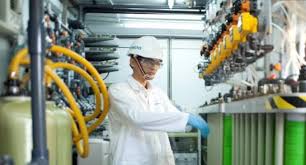
Requires an application commonly referred to as either “Degasification” or "Decarbonation" and it requires the use of a piece of water treatment equipment called either a “degasifier” or a “decarbonator”.
Both of these are similar in nature and are designed for Carbon Dioxide (CO2) removal from the incoming water. A properly designed decarbonator can remove 99.99% of the free carbon dioxide gas that is present in the water stream. One of the primary reasons for utilizing a decarbonator or degasifier for the removal of carbon dioxide gas is the raise the pH of the water without the need to add caustic. resulting in high-purity water.
The other reason is the remove the CO2 prior to treating the water with Ion Exchange which utilizes Anion or Cation resins to reduce the regeneration cycles for the resin beds. High concentrations of CO2 consume the ion charge within the resins and require more frequent regeneration cycles. The difference between anion and cation resins is that one is positively charged (anion) and the other is negatively charged (cation), cation resins, attract positive ions with their negative charge.
The term decarbonation describes the process of the removal of suspended gas or the conversion of carbonic acids into free Carbon Dioxide. Carbonic Acid (H2CO3) is stable at normal ambient anhydrous conditions. However, Carbonic Acid decomposes when not stable and in the presence of any water molecules to form carbon dioxide (CO2). The Carbonic acid breaks down when present in water and it is converted to a gas based upon certain conditions. It is common to have CO2 present in water requiring a decarbonation process when utilizing certain types of water filtration such as membrane filtration with reverse osmosis or it can be present when the need to adjust pH is required. When removing (CO2) the process is often referred to as “Decarbonation”, when removing (H2S) Hydrogen Sulfide the process is often referred to as “Degasification”.
Topics: water treatment issues, degasification, pH levels of water, aeration, iron oxidation, water treatment, water plant, bicarbonate, hydrogen sulfide (H2S), pH levels, Decarbonation, ION Exchange Resin, dissolved gases, De-Aeration, wastewater, carbon dioxide, oxygen, decarbonator, degasifier, gases, carbonic acid, H2S Degasifier
The Basics of Water Decarbonation
and the removal of carbon dioxide (CO2). The need to remove (CO2) is essential in most Aquaculture, Municipal, Industrial, and Food & Beverage Processes To understand you must familiarize yourself with Henry’s Law.
Henry's Law defines the method and proportional relationship between the amount of a gas in a solution in relation to the gas's partial pressure in the atmosphere. Often you will see and hear various terms like degasification, decarbonation, aeration, and even air stripping when discussing the removal of dissolved gases and other convertible elements from water. Understanding the impacts that Carbon Dioxide (CO2) can have on both equipment and aquatic life provides the basic reasons why the need to decarbonate water, exists. Carbon Dioxide (CO2) can exist naturally in the raw water supply or be the result of ph control and balance. In either case, the process called Decarbonation or Degasification provides the most cost-effective and efficient manner to reduce or tally remove (CO2) from the water. In addition to Carbon Dioxide (CO2), water can contain a variety of other contaminants that may impact the removal efficiency of the Carbon Dioxide. A variety of elements as well as dissolved gases such as oxygen, nitrogen, and carbon dioxide (CO2). A full analytical review of the water chemistry is required to properly design and size the “Water Treatment” process.
Breaking the bonds in water releases a dissolved gas
such as carbon dioxide (CO2) you must change the conditions of the vapor pressure surrounding the gas and allow the gas to be removed. There are many variables to consider when designing or calculating the “means and methods” of the removal of carbon dioxide (CO2). When I refer to the means and methods. I am referring to the design of a decarbonator and its components. The means equals the size and type (Hydraulic load) of the decarbonator and the “method” equals the additional variables such as the cubic foot of airflow (CFM) and “Ratio” of the air to water to accomplish the proportional condition needed to remove the carbon dioxide (CO2).
Topics: water treatment issues, degasification, pH levels of water, aeration, iron oxidation, water treatment, water plant, bicarbonate, hydrogen sulfide (H2S), pH levels, Decarbonation, ION Exchange Resin, dissolved gases, De-Aeration, wastewater, carbon dioxide, oxygen, degasifier, gases, carbonic acid, H2S Degasifier, removal of CO2 from water
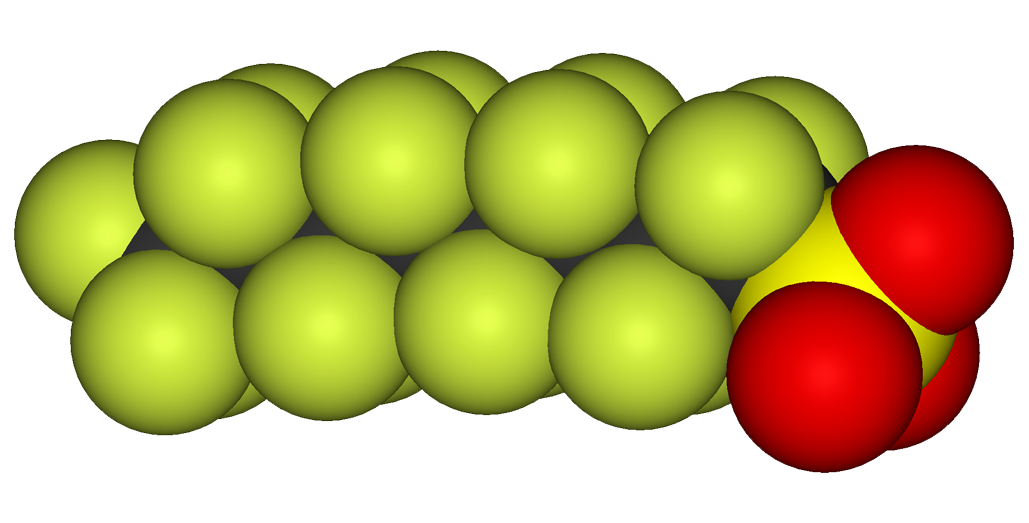
The EPA and other world health organizations have sounded the alarm on the dangers and health impacts of being exposed to per- and polyfluoroalkyl substances (PFASs & PFOAs) also known as the forever chemicals.
In response, federal and state regulators are adopting new water quality guidelines and laws to address these contaminants in our drinking water systems and groundwater pollution. It's a pervasive issue, as PFASs can be found in various types and over 4,700 different variations, each with at least three polyfluorinated carbon atoms.
With more than 10,000 types of PFASs introduced into products, it's no wonder that the quality of drinking water in the USA and other countries has been compromised. But what exactly are PFASs? These are fluorinated substances that contain at least one fully fluorinated methyl or methylene carbon atom. While they do not contain atoms like hydrogen, chlorine, bromine, or iodine, any chemical with a perfluorinated (CF3) or perfluorinated (CF2) component falls under the PFAS category. However, there are a few exceptions.
PFASs can be further classified into subgroups such as surfactants, perfluorosulfonic acids, perfluorooctane sulfonic acids, perfluorocarboxylic acids, and perfluorooctanoic acids (commonly referred to as PFOSs and PFOAs). These persistent organic pollutants, also known as "forever chemicals," pose a significant challenge due to their resistance to environmental degradation. As a result, they are found in humans, animals, and water supplies across the USA.
Topics: degasification, NSF/ANSI 61, Decarbonation, Safe drinking water, ansi61, Co2 ph, CO2 in water, Deagasification, hydrogen ion, DeLoach Industries, Inc.