Ammonia (AM) is a common water pollutant that significantly impacts the water process industry.
It is not just polluting water bodies but also aqua wells and humidifiers. Generally, AM is produced from human sweat and urine and created from synthetic ammonia in industrial processes.
Ammonia has three types of amines – primary, secondary, and tertiary – all are toxic for humans and aquatic life.
- Primary Amine has two carbon and one nitrogen atom, also called methylamine or CHNH2.
- Secondary Amine has two nitrogen atoms with no carbon atom between them, also called Dimethylamine or CH2(NH)CH3.
- Tertiary Amine has three nitrogen atoms with no carbon atoms between them; thus, it’s called Trimethylamine or CH3C(NH)CH3.
In natural conditions, primary Amide bacteria produce Amide under high-temperature conditions. In an aqueous solution and soil environments with high pH levels (>6).
Primary amide can form by the dehydrogenation of nitriles, such as acetonitrile, which are further oxidized to form acetic acid.
Primary amide form by alkaline hydrolysis of nitro compounds such as 2-nitrophenol.
Process systems often need to recognize when the Degasification or Decarbonation system is failing or underperforming.
Read More
Topics:
Decarbonation,
decarbonator,
degasifier,
Amine,
Ammonia,
Deagasification,
Filter Media,
distribution system,
blower motor,
process system,
frequent inspections
Protecting Your Pharmaceutical Water: Ensuring Quality and Efficiency in Water Treatment
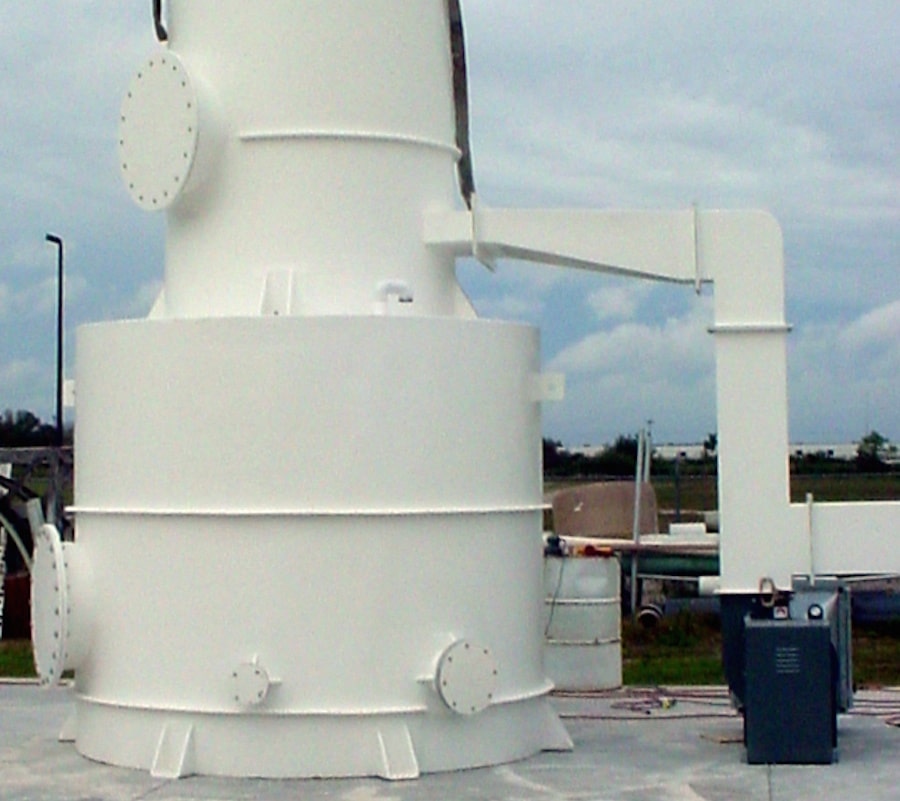
In the pharmaceutical industry, the removal of dissolved gases from water is a critical step in the water treatment process. However, it is essential to select the appropriate method of removing these gases, as the wrong choice can have detrimental effects on vital process water equipment such as steam boilers and distillation columns. Failure to address high levels of carbon dioxide (CO2) in the water can lead to the formation of carbonic acid, which corrodes and damages both the steam boiler tubes and distillation columns. To mitigate these risks, the implementation of a degasification tower or "Degasifier" is crucial, as it effectively removes dissolved gases like hydrogen sulfide (H2S) and carbon dioxide (CO2) to acceptable levels below 7 parts per billion (ppb).
Utilizing a degasification tower offers a cost-effective solution to reduce and eliminate gases in the water stream. In comparison, alternative methods such as reverse osmosis (RO) membranes require additional steps, including pH adjustment, to achieve similar results. The conversion of carbon dioxide (CO2) into carbonates can result in increased membrane fouling and elevated capital costs for the RO system. By implementing a degasification system, businesses can achieve optimal performance, minimize membrane fouling, and benefit from cost savings in both capital and operational expenses.
Read More
Topics:
degasification,
water treatment,
hydrogen sulfide (H2S),
dissolved gases,
pharmaceutical water,
carbon dioxide,
degasifier,
gases,
RO membrane,
carbonic acid,
RO system
Water treatment towers and storage tanks are high places that require special precautions when entering. While the majority of people who enter these locations for work can be trusted, there are some hazards that make it more important than usual to follow safety procedures.
These locations can get very hot and humid, and can also be filled with harmful chemicals and microorganisms that can cause serious health issues if inhaled or absorbed through the skin. Therefore, the general standard for workplace safety is much higher when entering locations like these.
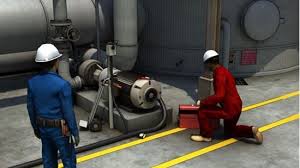
Make sure you have read and understood the following information about safety when entering a water treatment plant. It will help you understand how to stay safe and protect yourself from harm when entering a water treatment plant. normal installation, maintenance, or even emergency repairs, it is often required to enter into a water treatment tower (degasifier, air stripper, decarbonator, or clear well/ storage tank). When this occurs, full safety protocols should be followed at all times, in accordance with OSHA regulations. A tower or tank B classification is a "Confined Space" location. For more information visit the OSHA confined space regulations page.
In addition, there are other safety risks that an operator or technician can be exposed to while inside these types of closed locations. The risk can come from fumes of hydrogen sulfide (H2S), chlorine from an injection line, or a lack of oxygen O2. A proper confined space permit should be prepared and only technicians with proper training and certifications should enter into these types of confined spaces.
Read More
Topics:
water treatment issues,
water quality,
odor control,
water treatment,
advanced treatment solutions,
biological scrubber,
water plant,
safety,
odor control scrubber,
hydrogen sulfide (H2S),
Chemical Odor,
media packing,
scaling,
caustic,
Safe drinking water,
dissolved gases,
wastewater,
carbon dioxide,
degasifier,
gases,
Ammonia,
what is a scrubber,
Hydrogen Sulfide formula,
Deagasification,
Filter Media,
DeLoach Industries, Inc.,
Drinking Water,
Clean Water,
Contaminated Water,
OSHA
Read More
Topics:
water treatment issues,
water quality,
pH levels of water,
aeration,
water treatment,
advanced treatment solutions,
fiberglass,
About DeLoach Industries,
fabrication,
biological scrubber,
Chemical Odor,
media packing,
pH levels,
Decarbonation,
De-Aeration,
decarbonator,
boiler system,
distillation,
degasifier,
RO system,
H2S Degasifier,
Fish Farming,
Aquaculture,
Pisciculture,
Biological Odor Control Scrubber,
Biological odor control,
removal of CO2 from water,
Deagasification,
decarbonation of water,
Sand filters,
Filter Media,
municipal water systems,
greensand,
DeLoach Industries, Inc.,
Drinking Water
Industrial water treatment systems play a crucial role in maintaining the quality and sustainability of water used in various industrial processes. One of the key challenges faced by industries is the presence of dissolved gases, particularly carbon dioxide (CO2), and corrosive gases like hydrogen sulfide (H2S) in the water. These gases can have detrimental effects on equipment, cause pH imbalances, and even compromise the overall efficiency of industrial processes.
Read More
Topics:
water treatment issues,
water quality,
degasification,
water treatment,
decarbonator,
degasifier,
degassed water,
Deagasification,
decarbonation of water,
DeLoach Industries, Inc.,
Drinking Water,
DeLoach Industries,
water process system